
6 Resources for Teaching Logical Fallacies to Kids
Logical fallacies are flaws in reasoning. Learning to recognize them can help children evaluate claims, arguments, and even their own thought processes more carefully.
For this roundup, I looked for resources that explain fallacies in simple language and give examples of them in context.
1. By Kids, For Kids Story Time Podcast: Fallacies for Kids Series
Age: 6–10
Price: Free

This four-episode podcast series introduces logical fallacies through fictional stories performed by kids. Each episode focuses on a different fallacy:
- Straw man: Apple Podcasts | Spotify
- Slippery slope: Apple Podcasts | Spotify
- Appeal to authority: Apple Podcasts | Spotify
- False dilemma: Apple Podcasts | Spotify
After each story, there is an explanation of why the reasoning is flawed.
Because the teaching segments are brief, younger children may get more from the series if an adult listens with them and asks them to explain the reasoning mistake in their own words.
2. Brains On! Universe: State of Debate
Age: 8–12
Price: Free
State of Debate is a free collection of short audio lessons from the kids’ debate podcast Smash Boom Best. This page covers both how to build a strong argument and how to spot fallacies.
Scroll down to “How to spot a logical fallacy” for audio lessons on ad hominem, straw man, bandwagon, slippery slope, hasty generalization, and red herring. Each includes an example from the show and a written transcript.
3. Critikid: Fallacy Detectors
Age: 8–12
Price: US$20; first lesson free
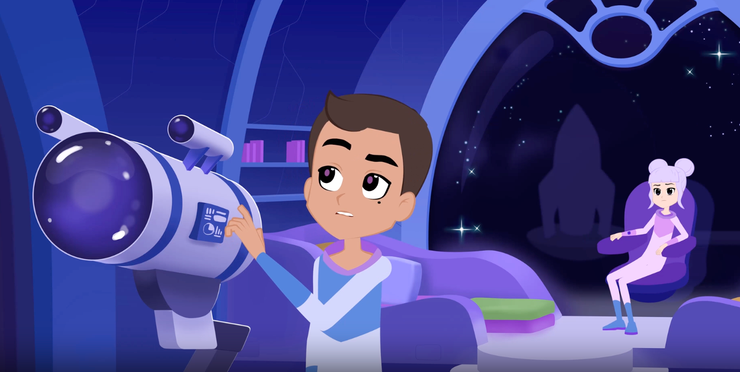
Fallacy Detectors is an online course in which kids embark on a science fiction adventure and encounter logical fallacies along the way. It contains 10 animated lessons and interactive activities.
The course covers circular reasoning, burden of proof, false dilemma, tu quoque, appeal to nature, hasty generalization, guilt by association, middle ground, slippery slope, and sunk cost.
Kids can work through the course independently, although many adults choose to join them and discuss the fallacies along the way.
4. TED-Ed: The Demon of Reason
Age: 11+
Price: Free

The Demon of Reason is a collection of six animated lessons about flawed arguments. Each video uses a moment from history to explore a fallacy, including false analogy, false cause, slippery slope, and circular reasoning. The videos are approximately four to eight minutes long.
TED-Ed does not give an age range for the series. I suggest ages 11 and up as a rough estimate, though suitability will vary by child. Adults can certainly learn from these videos, too!
5. Mental Immunity Project: Logical Fallacies Lesson Plan
Age: 12+
Price: Free
This lesson plan begins with a short introduction to common logical fallacies. Students read a fallacy-filled email, watch a video explaining several fallacies, and complete a worksheet.
They then write an intentionally misleading email using at least four fallacies, exchange their work, and identify and explain the fallacies used by other students. The full lesson takes about 60 minutes and also includes discussion questions and optional extensions.
The lesson is designed for high school but can be adapted for middle school or college.
6. Khan Academy: Evaluating Claims and Arguments
Age: 14–15
Price: Free
This guided-practice article teaches Grade 9 students to identify a claim and assess how well the author’s reasons and evidence support it. Students work through an extended example and look for irrelevant evidence, flawed reasoning, and ignored counterarguments.
Unlike the other resources in this list, its main focus is not teaching individual logical fallacies. Instead, it teaches students to evaluate an argument’s reasoning and evidence as a whole, making it a useful next step for students who have already been introduced to flawed reasoning.
Suggest a resource
Do you know of another logical fallacy resource for kids or teens that belongs on this list? Email me at stephanie@critikid.com with your suggestion.